Willa Hansen · 17 October 2026
Belora's Midnight Lantern Festival Illuminates Centuries-Old Storytelling Rituals
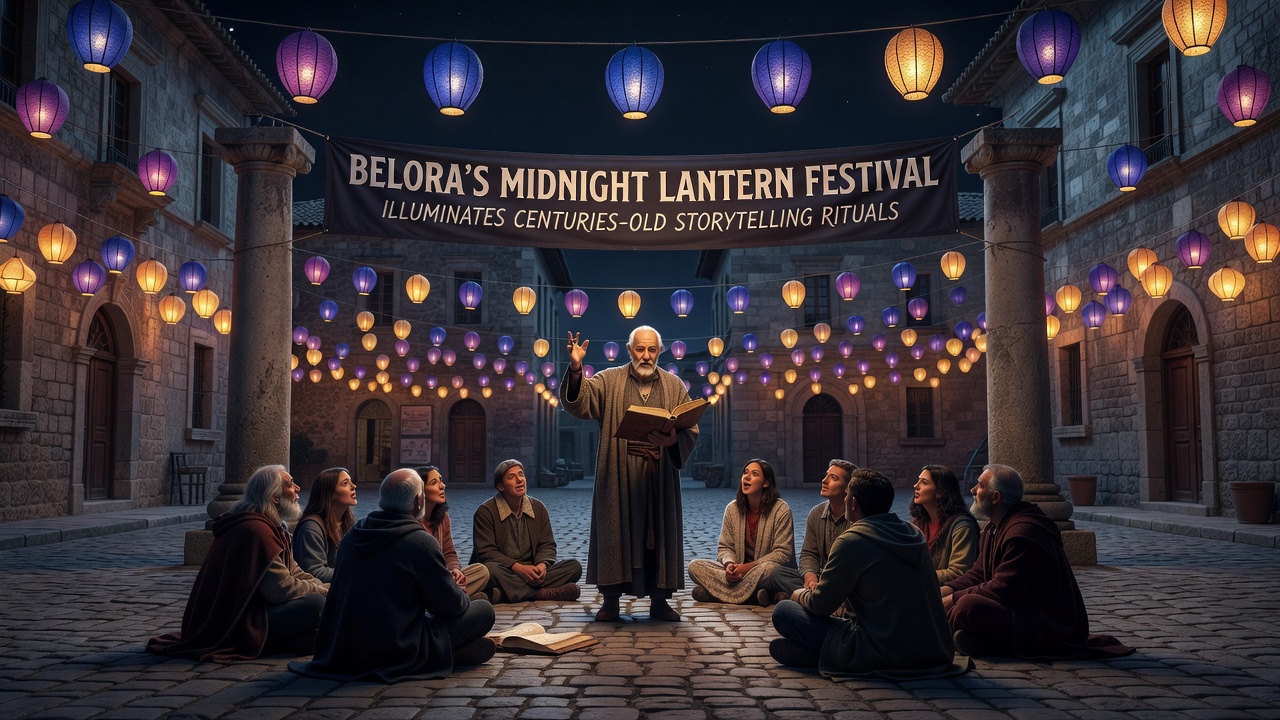
Belora's Midnight Lantern Festival takes place each October and centers on the transmission of oral narratives through lantern-lit gatherings that date back several centuries, with records from local archives showing consistent annual observances since at least the early 1700s. Participants carry handmade lanterns crafted from parchment and wood frames while recounting stories that cover regional histories, moral lessons, and seasonal changes. The event draws residents and visitors to specific plazas and courtyards where the ritual structure remains fixed across generations.
Historical Development of the Lantern Ritual
Archival documents preserved in Belora's municipal library indicate that the lantern component emerged during a period when nighttime assemblies required portable light sources to comply with municipal curfew rules, yet the storytelling element predates the lanterns by several hundred years according to transcribed oral accounts collected in the 1800s. Researchers from the University of Padua have cross-referenced these records with parish ledgers and noted that the practice expanded after a 1742 decree permitted extended evening gatherings for cultural purposes. Over time the lanterns evolved from simple oil lamps to the multi-colored paper designs seen today, while the core sequence of story cycles stayed intact.
By the nineteenth century the festival had incorporated specific lantern patterns assigned to different narrative themes, a system documented in a 1897 ethnographic survey conducted by the Italian Folklore Society. Those patterns continue in use, with red lanterns reserved for tales of migration, blue for agricultural cycles, and green for family lineage accounts. Local artisans maintain these color codes through annual workshops that train new participants in the traditional construction methods.
Structure of the Storytelling Sessions
Each session begins at dusk when groups assemble at designated starting points along Belora's central thoroughfare, and a designated narrator initiates the first story segment while the lanterns are lit in sequence. The narrative then passes to subsequent speakers at predetermined intervals, creating a continuous chain that lasts until midnight. Observers note that this relay format prevents any single voice from dominating and ensures multiple perspectives enter the account. Sound recordings made during the 2023 and 2024 festivals show average session lengths of three hours and forty minutes, with pauses only for lantern refueling or brief clarifications.
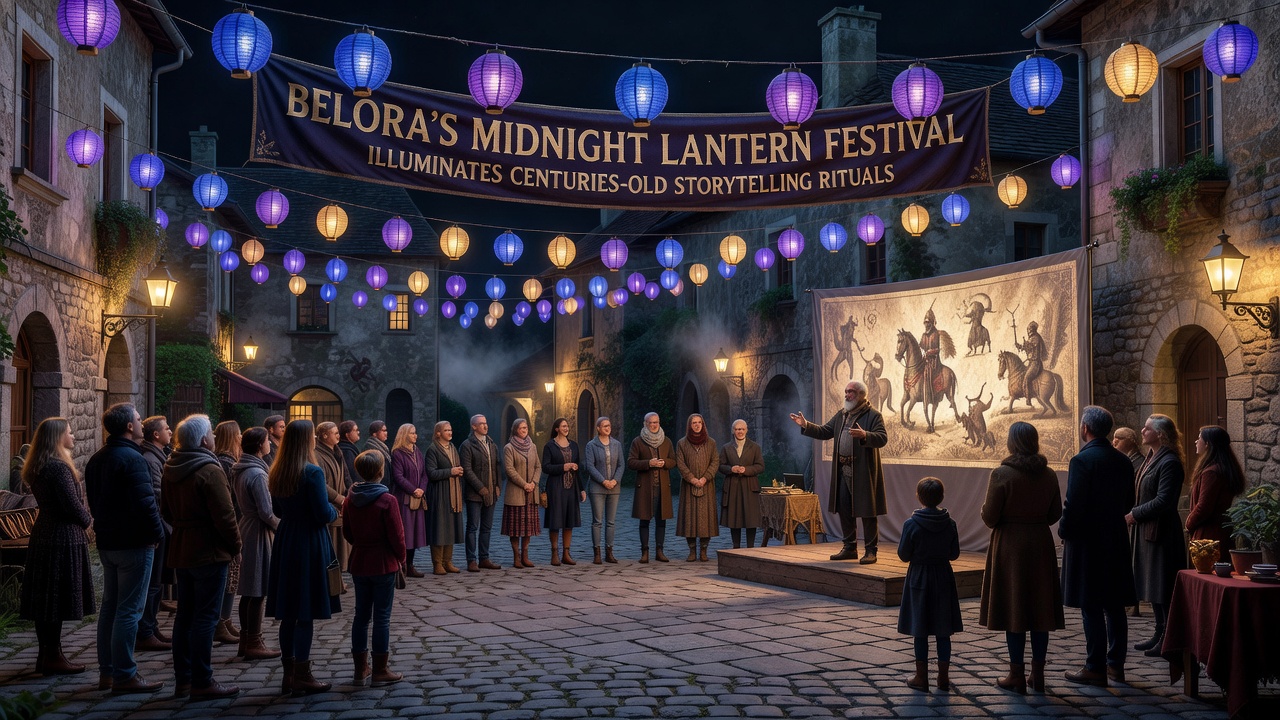
The content of the stories follows a fixed thematic rotation that covers seven primary categories, a structure confirmed in field notes compiled by anthropologists affiliated with the Australian National University during their 2018 fieldwork season. One category addresses water management practices from earlier centuries, another covers trade routes that once connected Belora to coastal ports, and additional categories treat courtship customs, weather prediction methods, and conflict resolution techniques. Storytellers receive the category assignment through a drawing held the evening before the festival, which ensures variety across years.
October 2026 Schedule and Participation Data
The 2026 edition is scheduled to open on October 17 with a procession that begins at the old market square and concludes at the river embankment, where the final lantern extinguishing occurs at 1:00 a.m. Organizers have published preliminary registration figures showing 1,240 confirmed participants, an increase from the 1,050 recorded in 2025 according to the Belora Cultural Events Office. The schedule includes twelve separate storytelling circles running concurrently between 8:00 p.m. and midnight, each assigned a distinct courtyard or garden space within the historic center.
Technical preparations for 2026 include the installation of low-voltage pathway lighting along routes between circles to reduce reliance on individual lanterns for navigation while preserving the visual effect of the main displays. Municipal records indicate that similar infrastructure adjustments occurred in 2019 after safety reviews conducted by regional fire authorities. Attendance projections supplied by the events office estimate that 3,800 visitors will pass through the lantern routes on the primary night, with an additional 1,200 expected during the daytime lantern-making demonstrations held on October 16.
Transmission and Preservation Efforts
Local schools have integrated segments of the lantern ritual into their curriculum since 2004, with students learning both lantern construction and basic narrative delivery techniques during after-school programs. Data collected by the regional education department shows that 87 percent of participating students report continued involvement in at least one festival circle after graduation. Community elders maintain a master list of approved story variants to prevent unauthorized alterations, and this list undergoes annual review by a panel drawn from the Belora Historical Society.
Digital archiving of the narratives began in 2012 under a partnership with the European Institute for Cultural Documentation, which supplied equipment for high-quality audio capture. The resulting database now contains 214 complete sessions recorded between 2012 and 2025, each tagged with lantern color codes and thematic categories for cross-reference. Access remains restricted to approved researchers, though excerpts appear in public exhibitions held during the festival week.
Conclusion
The Midnight Lantern Festival continues to operate as a structured mechanism for preserving specific oral traditions within Belora, supported by consistent municipal oversight, educational integration, and archival documentation. Participation numbers for October 2026 reflect ongoing community engagement, while the fixed ritual elements demonstrate continuity with earlier documented practices. The combination of lantern construction standards, narrative category rotation, and relay storytelling format maintains the event's established parameters across successive years.